
Chiomonte

Axel arrives in Chiomonte
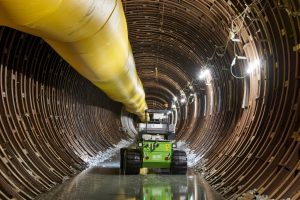
The CIM 4.0 competence centre has created for Webuild the first autonomously-guided robot to safely explore the deepest area of the gallery.
Home | Construction sites | Chiomonte site
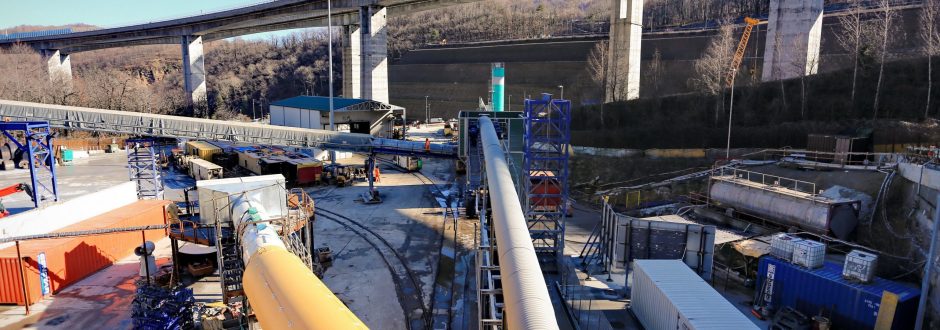
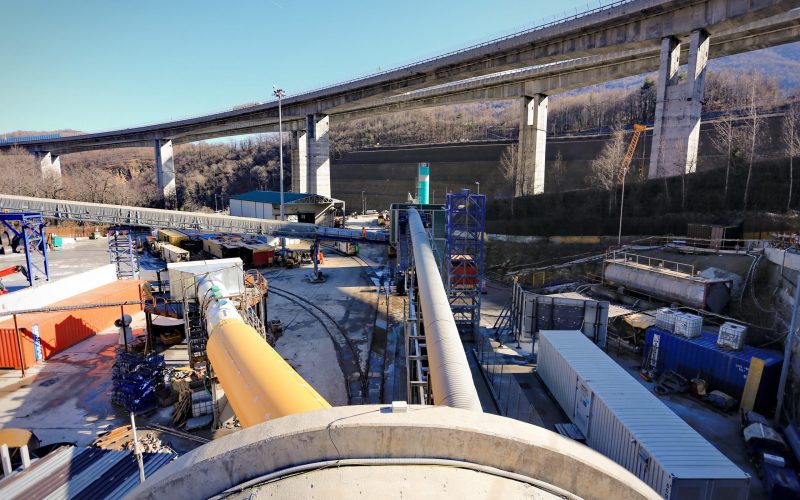
ACCESS ADIT AND BASE TUNNEL | 7 KM | WORK COMPLETED

The excavation was conducted mainly with mechanical means, using the “Gea” TBM, under an overburden of about 2,000 m of mountain. Since 2012 it has been a site of national strategic interest and today the site maintenance activities are underway in view of the start of the final works.
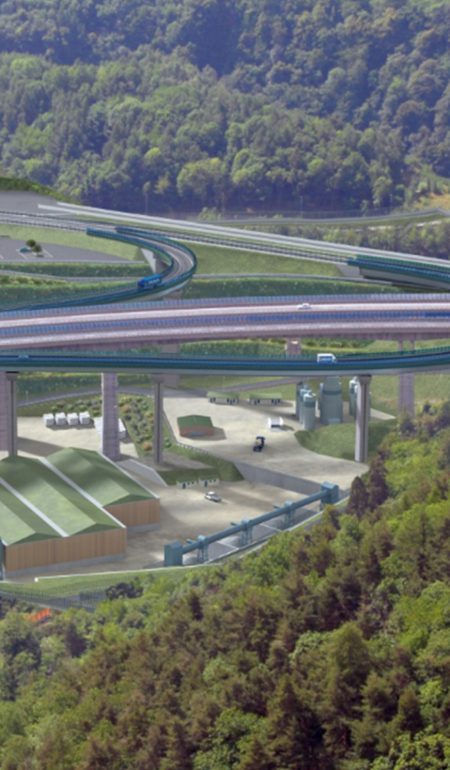
A variation of the final project was approved by the CIPE (Interministerial Committee for Economic Planning) in March 2018, following the Security Study conducted by the National Interuniversity Consortium for Transport and Logistics (NITEL), consisting of 20 Italian universities with over 500 researchers. According to this variation, and in order to ensure the safety of workers and citizens, the main activities for the construction of the base tunnel in Italy will start from the Chiomonte construction site (instead of from Susa as originally intended).
The site will expand by 4 hectares to a total of 12, extending under the viaduct of the A32 motorway to the municipalities of Chiomonte and Giaglione, in an area already used by SITAF during the construction of the motorway. At approximately 40 m from the first tunnel, a second one will be built parallel to the survey tunnel, having the same diameter as the base tunnel. During work, this will be the access point for the TBM which will begin boring towards Susa, while, once operational, the first section of the tunnel will be used for ventilation and smoke extraction for the base tunnel and as the Clarea safety site, and, in the second section, for the possible definitive storage of green rocks.
The construction of a safety site and of a ventilation centre for both the tunnel and this site is also planned. The centre is designed with a semi-underground solution, with terraces planted with greenery, and rows of vines and apple trees so as to integrate it seamlessly in the territory. It is foreseen to use materials such as weathering steel, wooden slats and local stone. The new configuration was deemed by the competent authorities to be the most suitable for ensuring safety while maintaining soil consumption to a minimum and limiting environmental impacts.
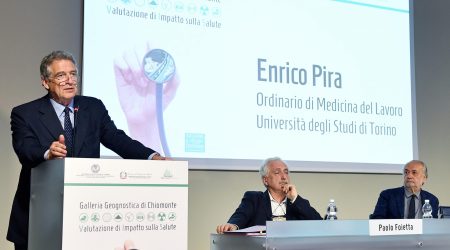
The rigorous environmental controls carried out on the site led to the implementation of the Health Impact Assessment, in collaboration with the University of Turin.
Since 2012, in fact, the main environmental pressure factors in the work area have been monitored: over 62,000 measurements have indicated a situation of compliance with the values.
The Maddalena tunnel started as an exploration tunnel. Today, the construction site variant foresees that the excavation of the base tunnel will start from Chiomonte instead of Susa and therefore it is necessary to adapt the tunnel in order to allow construction vehicles to pass through. 22 interchange niches will be built and inserted as recesses along the exploratory tunnel.
During the excavation of the base tunnel, this exploratory tunnel will be used as service access for the circulation of vehicles and equipment on the construction site and as ventilation system. These niches will be 30 to 40-m-long, 3-metres-deep areas that will allow vehicles to cross over safely. They will be excavated using the traditional method over a period of 19 months. This will start the transition of the construction site to the construction phase of the base tunnel.
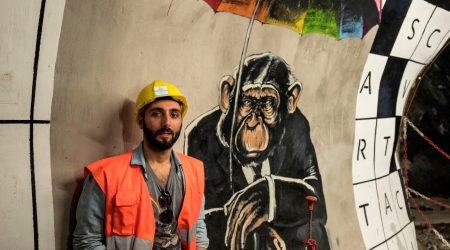
In 2016, while works for the survey tunnel were underway, this site hosted the first example of Tunnel Art Work which, through the application of graffiti, has transformed the railway tunnel into an art gallery located within the heart of the mountain.
The art project, curated by Luca Beatrice, has involved Italian and French graffitists, painters, and street artists, reflecting the binational nature of TELT.

7.020 m of length

170 people employed during peak phases

2012: opening of the construction site

60.000 environmental measurements
The CIM 4.0 competence centre has created for Webuild the first autonomously-guided robot to safely explore the deepest area of the gallery.